For a temple visit in Bali, stay within areas where sightseeing is permitted and do not enter sacred worship areas as a tourist. Buying a ticket or putting on a sarong does not grant access beyond every gateway. Clothing and permission to enter are separate checks.
Appropriate clothing does not grant access to sacred areas
The Japanese Consulate-General in Denpasar’s published summary of the Bali governor’s circular (Japanese PDF) calls for polite, modest and appropriate clothing in public and sacred places. It separately prohibits entry to sacred temple and shrine areas, with an exception for people who need to worship or pray while wearing Balinese traditional clothing.
This is not an invitation to rent clothing and enter for sightseeing. Even when a gate is open or other people are going through, ask the attendant which areas visitors may enter. The same guidance records a local religious restriction on women entering sacred areas during menstruation. If a boundary or an individual circumstance is unclear, ask an attendant discreetly before entering and follow their instructions.
Prepare clothing, then check the site’s requirements
As a practical packing suggestion, choose modest clothing and bring a layer that covers your shoulders. This is not a claim that every temple has an identical dress code. Ask the place you intend to visit whether a sarong, a cloth wrapped around the waist, and a sash are required and whether you may use your own.
Do not assume that clothing is available to borrow, that it is free, or that it is included in admission. Allow time to change rather than adding a temple stop in beachwear. If steps or walking conditions matter to you, ask about the actual visitor route rather than judging accessibility from the temple’s name or a general photograph.
Ask where sightseeing is permitted before passing a gate
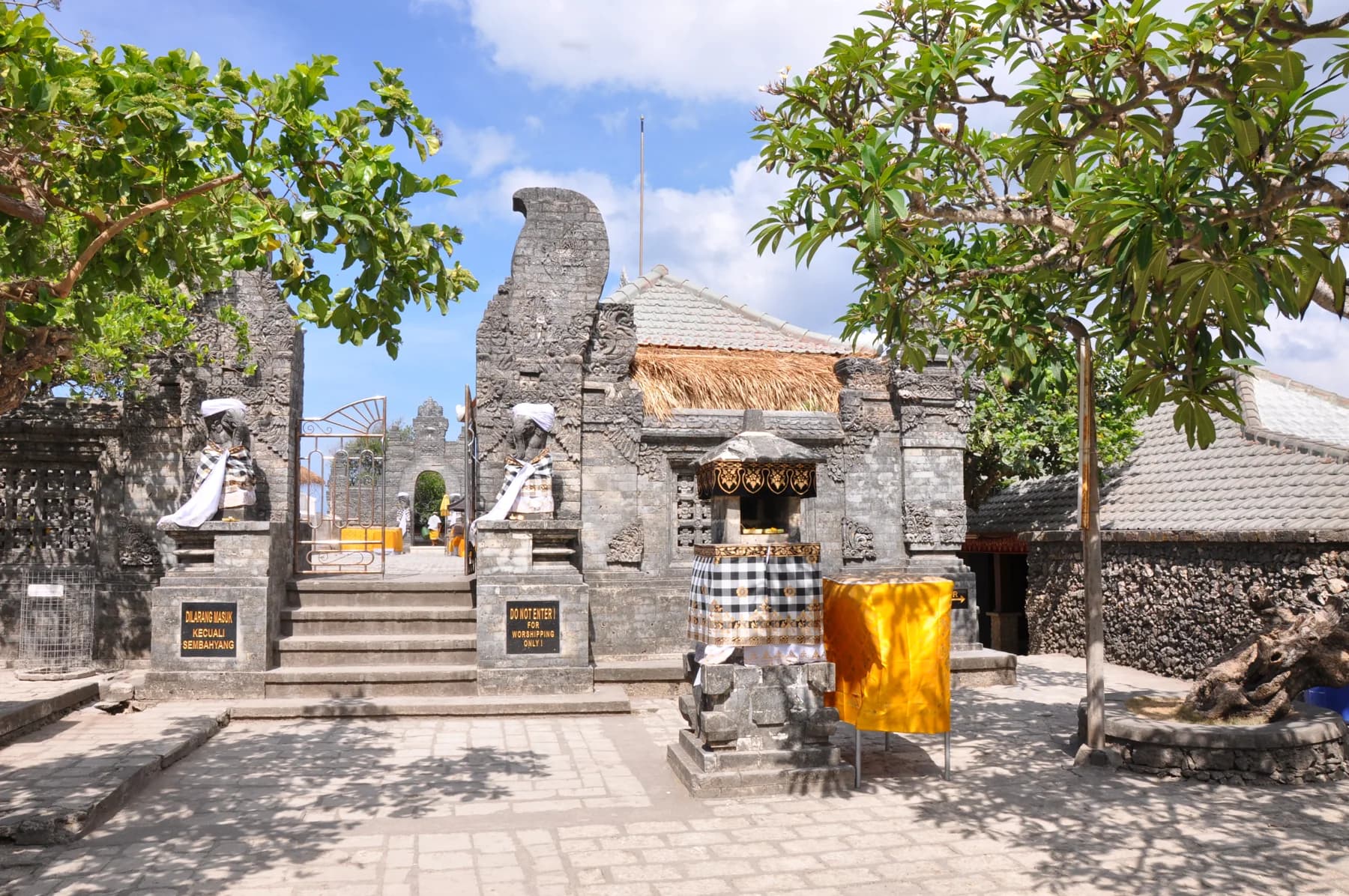
On arrival, ask the attendant or guide: “Which areas may visitors enter today?” and “Are any areas closed?” Stop before signs or barriers, and do not mistake a route used by worshippers for a visitor path. An old travel photograph does not establish that you may stand in the same place today.
The circular also lists using a licensed guide when visiting tourist attractions as an obligation. Check the guide’s credentials with your provider; do not assume that a transport driver and a temple guide are the same service. Leave room to change plans around ceremonies and instructions on site.
Photograph from permitted places without interrupting worship
The circular prohibits climbing sacred trees or buildings and desecrating sacred places, including photography in inappropriate clothing or without clothing. Do not climb gates, statues or altars, or cross an access boundary, to obtain a photograph.
Before taking pictures, check whether photography is permitted there. Ask people before photographing them at close range, keep ceremonial routes clear and put the camera away if permission is uncertain. These are practical suggestions for a considerate visit, not a replacement for each site’s photography rules.
Before leaving Canggu
Confirm the visitor areas, clothing arrangements, licensed guide and return transport before setting out. Use the half-day outing guide for planning and the official access page for your starting point. This article does not mean temple tours, clothing loans or admission arrangements are included in a Villa Rumah Wayan stay. See the official FAQ for accommodation conditions.
The guidance dated 24 March 2025 was checked on 24 November 2026. Recheck the consulate’s current notices (Japanese) and the destination’s rules before your visit. The accompanying photograph shows Uluwatu Temple in 2013, by Jorge Láscar. It is not a map of current access permissions or a photograph of the property.